> [!headshot]
>
> 
# About: profile, background, bio
> [!overview]
>
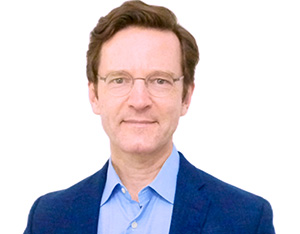
> My CreativeSkeptic work integrates my experience as an AI analyst at Forrester Research, cognitive science researcher, software developer and designer, author, and science & technology filmmaker.
## LinkedIn profile
> [!linkedin-profile]
>
> For details about my experience and education, see [my LinkedIn profile](https://www.linkedin.com/in/davidtruog/).
## Background
> [!background]
>
> If you’re considering working with me, you may be interested in knowing more about my background than what’s in my LinkedIn profile. Below are some details about facets of my experience that are relevant to the various services I provide.
>
> I’ve included a few personal anecdotes since those can be useful to weave into introductions at events where I’m speaking.
### Author
> [!author]
>
> ![[author.png|A Forrester blog post by David Truog titled “Six Technologies Will Make Digital Experiences More Humanlike (And Generative AI Is Just One Among Them)”)]]
>
> I've written about technology my whole adult life: a thesis about neural networks, dozens of technical whitepapers for software companies, hundreds of research reports (and some blog posts) at Forrester, and articles for business technology publications.
>
> Conducting research is the crucial first stage but, to communicate my findings, analysis, and ideas effectively, I meticulously consider who the **audience** is, and I invest deeply in **clarity** and **interpretive care**.
>
> As Theodor Adorno wryly remarked, **“No knowledge is immune to communication”** — and that's especially true with complex technology topics like AI.
### Speaker
> [!speaker]
>
> ![[speaker.png|A photo of David Truog speaking to a large audience in a conference hall]]
>
> When I started crafting and delivering keynotes as an analyst at Forrester Research, it reminded me of my first taste of public speaking — in high school. I was asked to lead a series of workshops teaching my peers computer programming and I realized I enjoyed giving people **“aha” moments** as I explained complex concepts. The experience also tapped into aspects of theater and acting I enjoyed.
>
> I get that same feeling to this day, as an independent speaker — whether on the mainstage at a conference, in the more intimate setting of a conference room, or delivering a presentation or a training workshop virtually.
### Advisor
> [!advisor]
>
> ![[advisor.png|An image of the cover page of a Forrester report about generative AI lead-authored by David Truog]]
>
> I've guided clients as an analyst, filmmaker, and software consultant.
>
> As an analyst, it was through **research reports and in-person advice**: explaining emerging technologies and trends, analyzing the implications, and helping clients apply those insights to their organizations.
>
> As a filmmaker, I advised clients I made videos for as I coached them through reflection on important anchoring questions that help shape positioning and narrative: “**Who are we? What do we stand for?** And what do we want our audience to know, feel, and do after having watched this video?”
>
> As a software consultant, I advised clients on identifying the intersection between their business goals and those of the people whose needs they aimed to meet.
### Filmmaker
> [!filmmaker]
>
> ![[filmmaker.jpg|A still image of Tim Berners-Lee, inventor of the World Wide Web, from a video about his work on the Semantic Web]]
>
> Working as an independent filmmaker for a decade, I **founded and ran my own studio**, [Upland Productions](https://davidtruog.art/videos/portfolio), directing and producing about 340 short non-fiction videos.
>
> I conceived, planned, and created 20 **science & technology documentaries** streamed by MIT Technology Review.
>
> I also made videos focused on science, technology, and business for many companies and large non-profits — including Microsoft, Ambient Devices, New Atlantic Ventures, Bioteam, Whitehead Institute for Biomedical Research, Molecular, Vitality, MIT Sloan School of Management, Children’s Hospital Boston, Avery Dennison, and Cambridge Innovation Center.
### Critic
> [!critic]
>
> ![[critique.png|A conceptual diagram showing creation and critique interconnected by arrows in an iterative cycle]]
>
> Creating anything (a music composition, a software application, or a company) is not just about **creating** it — excellence is the result of also **critiquing our creations** so we can improve them. Self-critique is central to my own process. I also invite colleagues and clients to critique my work, and I do the same for them when the relationship is grounded in candor and trust.
>
> So when people say "be a creator, not a critic" I say no — *be both.* As radio and television producer and host Ira Glass put it, “**Make a version, and then make it better and then make it better.**” How can you do that unless you’re able and willing to critique it?
>
> Not critiquing our work is a recipe for mediocrity — as Samuel Butler warned, “Think of and look at your work as though it were done by your enemy. If you look at it to admire it, you are lost.”
### Developer
> [!developer]
>
> ![[developer.png|A photo of the cover of the book “Programming the Z-80” by Rodney Zaks]]
>
> Because of my experience as a coder, I'm able to **understand new technologies quickly and in depth** so I can explain their implications.
>
> I started thinking about AI in my teens without realizing it was AI, when I wrote an ASCII-rendered version of Pac-Man, and created an algorithm for making the game’s animated ghosts move in pursuit patterns that appeared intelligent.
>
> I wrote the logic in Zilog Z-80 machine code, because although I'd used BASIC, Pascal, and Forth, they couldn't deliver the speed and control I wanted, and no assembler was available. Studying AI in college, I learned some Lisp and Prolog. Later, when I started coding professionally, it was in C, C++, Objective C (on NeXT), and Clipper. Since then, I've dabbled in Perl, PHP, JavaScript, Java, Lua, Swift, and Python.
### Designer
> [!designer]
>
> ![[designer.png|A photo of an antique tricycle]]
>
> I've always been drawn to UX work: making technology more effective, easy, and enjoyable for people to use.
>
> When I was a software engineer I also did a lot of UX design and developed a passion for it — not just UI design but interaction mechanics and information architectures that reflect users' mental models.
>
> It’s remarkable how many **design patterns like progressive disclosure apply to any medium** — whether text, video, or now AI-powered experiences. (See the book [*Writing is Designing*](https://rosenfeldmedia.com/books/writing-is-designing/)). And there are always trade-offs that require thoughtful consideration. As Charles Eames said, “the role of designers is that of very good, thoughtful hosts anticipating the needs of their guests.” But as Doug Engelbart pointed out, “If ease of use were the only valid criterion, people would stick to **tricycles** and never try bicycles.”
## Personal
> [!personal]
>
> ![[personal.jpg|A photo of a mountainous landscape on Mount Desert Island, Maine]]
>
> I live and work in Bar Harbor, a coastal Maine town on Mount Desert Island, and travel regularly out of Bar Harbor’s regional airport for in-person engagements.
>
> Although I'm American, I lived in France from age five until moving back to the United States for college at 18, then worked in Paris for a few years before settling back in the US. So **I'm bilingual and bicultural (French and English)** and I enjoy working with French-speaking clients.
>
> In addition to sharing my research, I also share some of [my art photography](https://davidtruog.art/photos) and occasionally compose and perform music.
## Bio for events
> [!bio-for-events]
>
> If I'll be speaking at your event, here's a short bio for the program:
>
> > David Truog is an independent AI strategy analyst and advisor, and the founder and principal of CreativeSkeptic. He was previously a Forrester Research analyst, research director, and vice president, where he advised executives at leading global organizations about AI.
>
> If you’d like to write a more detailed bio or a scripted live introduction aligned with the theme and tone of your event as well as the topic of my presentation:
> - Feel free to **borrow from *Background*** above.
> - Please **run your draft by me** prior to publishing — or ask me to write it.
> [!tile-set]
>
> > [!link-to-research]
> > **[[Research|Research →]]**
> > Why I do it and where it is
>
> > [!link-to-services]
> > **[[Services|Services →]]**
> > About my work for clients
>
> > [!link-to-contact]
> > **[[Contact|Contact →]]**
> > Send me a note via a form or LinkedIn